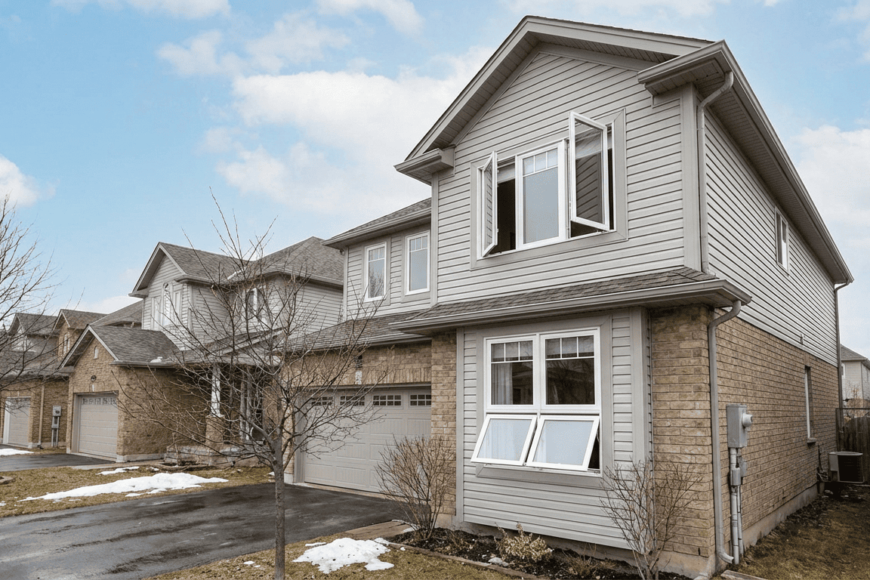
Casement vs Double Hung Windows is one of the most common “final decision” questions homeowners ask before ordering a replacement—especially in Barrie, where winter drafts, wind, and shoulder-season temperature swings make window performance feel very real. The good news is you don’t need to be an expert to choose well.
In this guide, we’ll compare how each style works, what it’s best at, and which rooms it tends to fit in Barrie homes. If you’re planning window replacement in Barrie, Ontario, use this as your practical checklist—and if you want a clear answer for your exact openings, a measurement visit usually settles the question quickly. For local service details, start with our Barrie windows and doors page.
Quick take: who should choose what?
Choose casement-style windows when you care most about:
- Strong draft control and a “tight close” feel (especially on windy sides of the house).
- Maximum ventilation—opening the window fully to pull in air.
- Easy operation in awkward spots (common over sinks or tight spaces).
Choose double-hung windows when you care most about:
- Flexible ventilation (top or bottom sash) and a more traditional look.
- Limited exterior clearance (decks, walkways, landscaping) because nothing swings outward.
- Easier cleaning on upper floors (many models tilt inward).
If you want to see the options we install, you can browse our casement window options and our double-hung window options.
How these windows work (plain language)
Casement windows (side-hinged, open outward)
Casement windows are hinged on the side and open outward—typically with a crank or handle. Because the sash presses against the frame when closed, casements are widely known for creating a tight seal, which can help reduce drafts when installed correctly. They can also open fully, and the open sash can “catch” breezes and direct airflow into the room, which is a big reason people choose them for ventilation.
One trade-off to know: because they swing outward, casements aren’t ideal where there’s an exterior obstruction (a narrow side yard, a deck rail, or a high-traffic walkway).
Double-hung windows (two sashes, slide vertically)
Double-hung windows have two operable sashes that slide up and down. The big advantage is ventilation control: you can open the top sash, the bottom sash, or both. That’s useful for airflow patterns and everyday comfort routines. Many homeowners also choose double-hungs because they suit traditional façades and because some models tilt inward for easier cleaning from inside the home.
A realistic trade-off: with more moving edges and weatherstripping surfaces, double-hungs can be more prone to air leakage over time compared to casements—though product quality and proper installation matter most.
Six factors that matter most in Barrie homes
1) Draft control and sealing on windy sides
If your main complaint is “I feel cold air near the window,” casements often have an edge because the sash compresses against the frame when closed. That doesn’t mean double-hungs are “bad”—it means casements are commonly chosen when the goal is the tightest close possible.
Barrie-specific tip: identify which side of the home feels the windiest and prioritize your best-sealing option there first.
2) Ventilation: how much air you want, and how you use it
Casements can open wide and act like a scoop for side breezes, which is excellent if you want maximum airflow. Double-hungs give you more control options—top sash only, bottom sash only, or both—which can be useful for everyday comfort habits.
A simple way to decide:
- “I want as much fresh air as possible” → casement tends to win.
- “I want flexible airflow without a big outward swing” → double-hung is often the fit.
3) Cleaning and ongoing maintenance
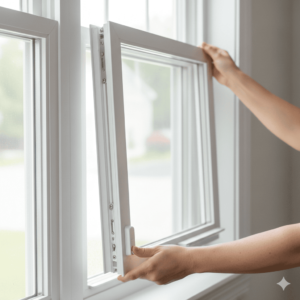
On multi-story homes, many homeowners prefer double-hungs because tilt-in sashes can make cleaning easier from inside. Casements can still be easy to clean on the main floor, but the outward-opening design can make exterior glass access tougher on upper levels depending on location.
Also remember the hardware difference: casement crank mechanisms may need occasional upkeep over time.
4) Exterior clearance (decks, walkways, landscaping)
If you have a deck, a tight side yard, or a walkway right outside the window, casements swinging outward can be inconvenient. In those spots, double-hungs usually make day-to-day use simpler.
5) Safety and ventilation habits (especially bedrooms)
Double-hungs let you vent from the top sash while keeping the bottom closed, which many families find practical for bedrooms. Casements can still work well in bedrooms—especially if you prioritize draft control—but it’s worth thinking about how you actually ventilate at night and in spring/fall.
6) Basement and egress considerations (a quick note)
If you’re replacing basement or bedroom windows where emergency escape requirements apply, the style can affect the clear opening you end up with. Casements are often favored in egress situations because they can provide a larger clear opening when fully open, but requirements vary—so treat this as a “confirm during measurement” item.
Room-by-room suggestions (Barrie examples)
Kitchen (especially over the sink)
A kitchen window is opened for quick ventilation. Casements are a common pick here because they’re easy to operate and can open fully. If you’ve been searching for “casement windows over a kitchen sink in Barrie,” you’re thinking in the right direction: function first.
Bedrooms
If your priority is flexible nighttime ventilation, a double-hung often fits well because you can open the top sash for controlled airflow. If your priority is reducing drafts on the coldest side of the house, casement may be the better starting point.
A practical compromise many homeowners use: casements on the wind-exposed sides, double-hungs where clearance is tight or where top-sash ventilation is a daily habit.
Living room / front elevation
Here, you’re balancing comfort, view, and curb appeal. Casements often offer a cleaner view, while double-hungs match traditional architecture on many front elevations. Photos of your front façade (and your preference for modern vs traditional lines) can help guide the choice quickly.
Basement
Basements often bring two priorities: comfort and safety/egress planning. This is where measurement matters most—because the existing opening size and required clear opening can decide the style more than preference.
The factor that beats “window style”: installation quality
The best-designed window won’t perform well if the installation is rushed or the opening isn’t sealed and finished correctly. Draft complaints often come from gaps, misalignment, or incomplete sealing—not just from the window style.
If you want the decision to be simple, start with a measurement visit and ask one question: “Given my openings and exterior clearance, where should I use casement and where should I use double-hung?” That’s exactly what a good installer should answer on the spot. You can also review what’s included in our window installation service before booking.
Not sure which style fits your rooms? Book a measurement and we’ll recommend a casement/double-hung mix that matches your home’s exposure, clearance, and daily use.
Nearby areas we serve (beyond Barrie)
We also help homeowners outside Barrie—for example, projects in Angus and Penetanguishene can use the same selection logic and installation standards.
FAQ: Casement vs double-hung (Barrie homeowners)
Which window style seals better in cold weather?
Casements are widely known for a tight seal when closed because the sash compresses against the frame, which can help minimize drafts when installed properly.
Which is easier to clean?
Many homeowners find double-hungs easier on upper floors because tilt-in features can allow cleaning from inside, while casements may require more exterior access depending on location.
Which is better for ventilation?
Casements can open fully and catch breezes for strong airflow, while double-hungs offer flexible ventilation by opening the top sash, bottom sash, or both.
Do casement windows need more maintenance?
Casements use crank mechanisms that may need occasional upkeep over time, while double-hungs rely on sliding tracks and balances; either can perform well with quality hardware and proper installation.
What if I like casement performance but have a deck outside?
That’s a classic case for mixing styles: use casements where you have clearance and want the tightest seal, and use double-hungs where outward swing would be inconvenient.
Can I mix casement and double-hung on the same home?
Yes—mixing styles is common and often the most practical approach.
If you’re deciding between casement windows for draft control and double-hung windows for flexible ventilation, the right answer is usually “it depends on the room.” We can help you pick a smart mix and install it properly so you feel the difference next winter.
To keep planning simple:
- Compare casement window options and double-hung window options
- See real results in our project gallery
- For Barrie-specific help, start at Barrie windows and doors
- When you’re ready, book through our window installation service